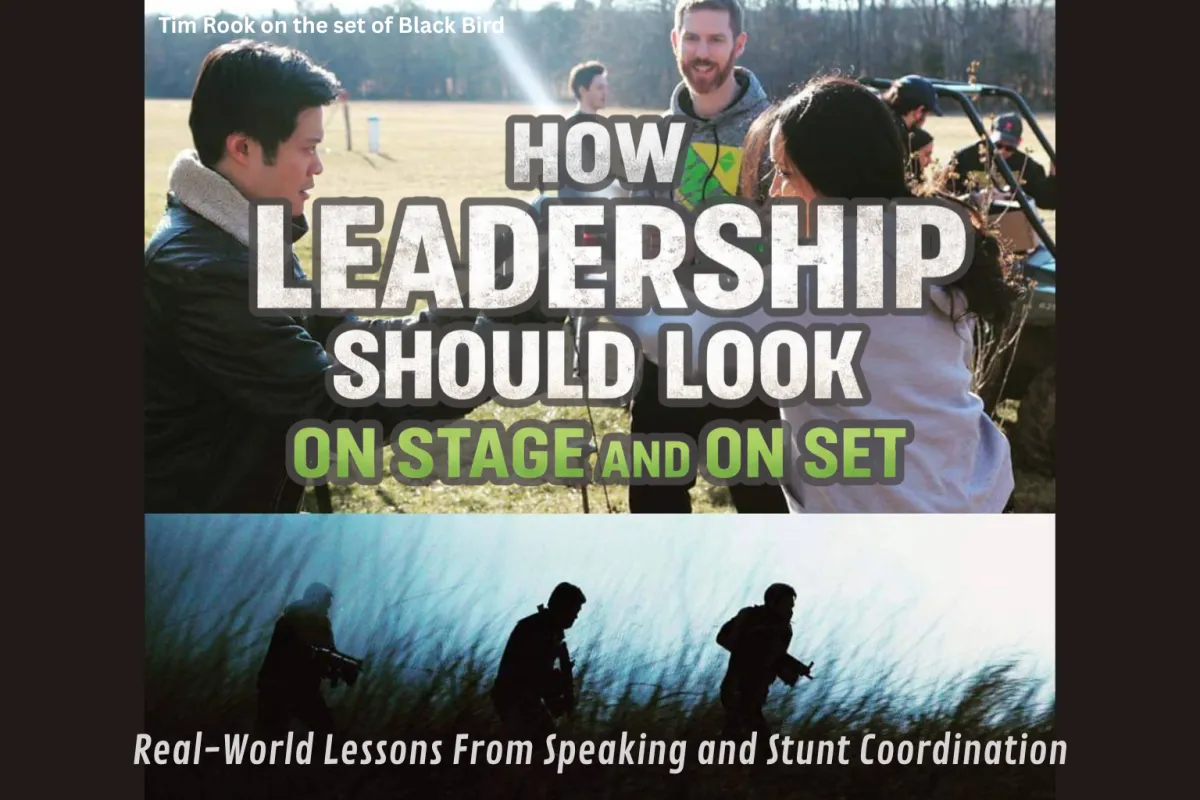
How Leadership Should Look on Stage and on Set
How Leadership Should Look on Stage and on Set
Leadership Lessons That Started on the Martial Arts Mats
Speaking didn’t start for me on a stage.
It started on the mats.
In martial arts classes with kids ages 5–7, 8–12, and teens who were still figuring out who they were, how to manage emotions, and how to believe in themselves.
That’s where I learned how to communicate in a way that actually changes people.
Teaching Kids Taught Me How to Lead
When you’re teaching kids martial arts, you’re not just teaching punches and kicks.
You’re teaching:
Confidence
Discipline
Focus
Self-control
Anger management
Emotional regulation
You’re teaching them how to:
Handle frustration
Listen under pressure
Respect boundaries
Lead themselves before leading others
And you learn quickly that how you say something matters just as much as what you say.
Kids don’t respond to hype.
They respond to clarity, consistency, and care.
That’s where my speaking voice was built.
Stories, Empathy, and Real Tactics
Every class required more than instruction.
It required:
Reading the room
Understanding emotional states
Adjusting communication on the fly
Using stories and real-life examples to make lessons stick
You can’t fake empathy with kids.
You earn trust or you lose them.
Over time, I learned how to explain complex ideas in simple, actionable ways and how to meet people where they are without lowering standards.
Those skills don’t expire.
They scale.
How That Translated Beyond the Mats
As those students grew stronger physically, something else happened.
They became:
More confident at school
More emotionally regulated
Better communicators
Natural leaders among peers
The soft skills they were learning weren’t just for martial arts.
They were skills that translate into:
Leadership
Teamwork
Career readiness
Life under pressure
That’s when I realized this work was bigger than classes.
Bringing That Same Skill Set to Film Sets
When I eventually stepped onto film sets, I didn’t leave that experience behind.
I brought it with me.
On set, I often work with actors who:
Don’t come from a martial arts background
Feel overwhelmed by choreography
Are worried about looking believable
That’s where teaching matters.
Instead of pushing, I help:
Break things down so simple a 5 year old could understand
Build confidence first
Teach movement through understanding, not intimidation
Help the memorization process through repetition
Use empathy to help actors feel safe and capable
The goal isn’t just executing a fight.
The goal is making the actor look strong, confident, and authentic on camera.
That approach comes directly from years of teaching youth.
Speaking Is Just Teaching at Scale
When I speak now, I’m doing the same thing I did on the mats.
I’m teaching:
How discipline builds confidence
How consistency beats motivation
How emotional control creates leadership
How pressure reveals preparation
The audience may be adults.
The principles are the same.
People don’t need to be yelled at.
They need tools they can actually use.
My Final Thought
Speaking didn’t come from chasing a spotlight.
It came from service.
From teaching.
From caring enough to help people grow.
Everything I bring to a stage or a film set today traces back to those early lessons on the mats.
That’s where leadership started for me.
And that’s the foundation I stand on every time I speak.
Written by Tim Rook
SAG-AFTRA Actor, Stunt Performer, Stunt Coordinator, Keynote Speaker
Favorite Hits Podcast
Apple Podcast
Sponsored by Next 1 UP Marketing


